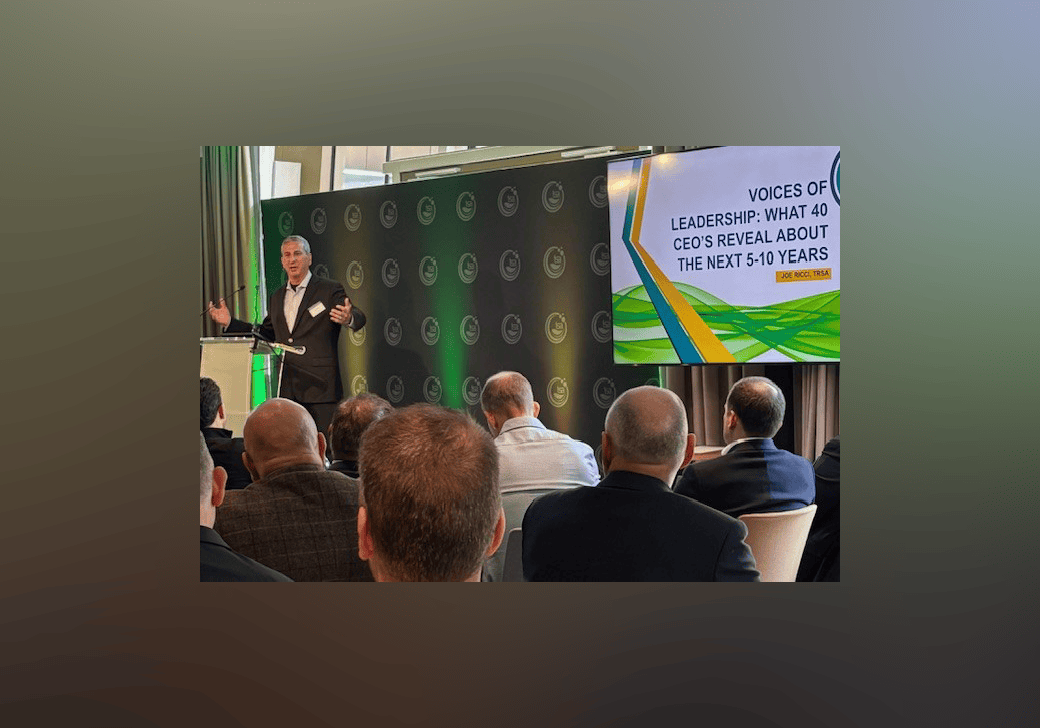

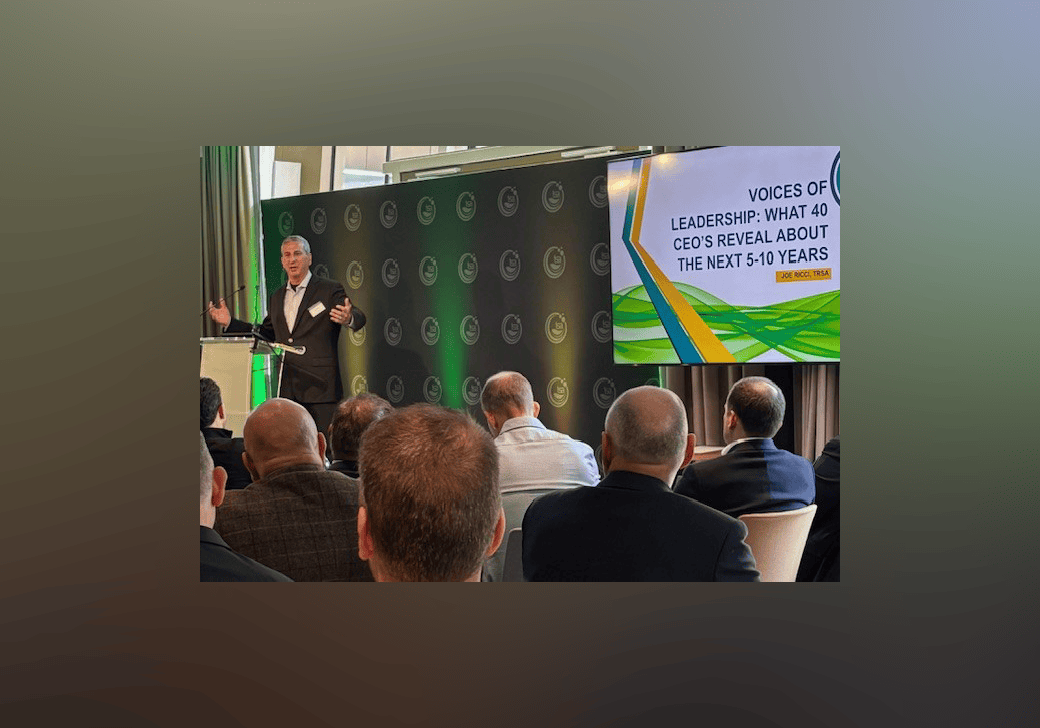
Workforce shortages, rising costs and the accelerating need for technology investment emerged as the most pressing concerns for the global linen, uniform and facility services industry, according to findings presented at the Textile Services Association (TSA-UK) Congress in Edinburgh, Scotland, by Joseph Ricci, president and CEO of TRSA.
The report combines feedback gathered from live polling of CEOs and senior executives operating laundries in the UK during the congress, and North American survey data and information gathered through peer-to-peer CEO discussions with combined contribution from more than 300 senior executives. The comparisons revealed strong global alignment – but also some notable differences, particularly regarding sustainability and energy costs.
The annual TSA Congress is one of the most important gatherings for the UK’s linen, uniform and facility services sector, bringing together senior executives, suppliers and policymakers for a concentrated, one‑day program of insight and networking. The congress is a key forum for discussing economic pressures, regulation, sustainability and technological change.
During the TSA Congress, staffing and cost pressures dominated the polling, asking executives to identify their most pressing issues. Responses clustered around “staffing,” “rising costs,” “labor,” “energy” and “inflation,” underscoring near-term operational strain felt at the leadership level. The polling also highlighted recruitment and retention challenges, particularly for skilled technicians and engineers – as a direct threat to productivity and returns on technology investments.
That concern is echoed in the broader North American survey data and CEO discussions, but with clearer prioritization. When asked which workforce factors would most impact their companies over the next three years, 48% of respondents cited salary and benefits costs, followed closely by leadership succession planning (45%) and employee retention (44%). While CEOs emphasized immediate staffing shortages in live feedback, the national results suggest companies are increasingly focused on longer-term leadership pipelines and organizational stability.
Technology adoption also cut across both sets of results. In the live polling, investing in new technology to reduce costs and increase productivity ranked highest among operational priorities, followed by improving operational efficiency and adopting artificial intelligence (AI) tools. CEOs acknowledged, however, that implementation remains complex due to integration challenges, capital requirements and a shortage of skilled technicians.
North American survey data and discussions reinforce this outlook. Nearly two-thirds of respondents identified technology investment and efficiency improvements as the most significant operational factors facing the industry in the coming years, with artificial intelligence and automation gaining traction but still lagging core infrastructure upgrades.
Customer expectations and sustainability pressures further unite the findings. Live polling showed executives increasingly concerned about growing customer demands for transparency and sustainability, while North American respondents reported strong interest in expanding into new customer segments and responding to heightened environmental expectations.
The primary difference between the two groups was the TSA Congress participants focus on raising energy costs and supply-chain issues that have accelerated since recent military activity in the Middle East exacerbating energy-related issues from the ongoing war in Ukraine. In addition, the UK industry in alignment with its European counterparts are more focused on sustainability issues driven by customers’ environmental concerns and emerging European Union regulations. (NOTE: The North American CEO discussions and surveys were conducted prior to any hostilities in the Middle East.)
Together, the findings paint a consistent picture: whether viewed from the executive suite or across the broader North American industry, workforce capability, cost control and strategic technology adoption are shaping the path forward for linen, uniform and facility services companies.
In addition to the presentation by Ricci, the TSA Congress included:
- Power Play: Laundry Leaders Meet Machinery Innovators with global equipment manufacturers Jesper Jensen, CEO, JENSEN Group; and Michael Harre, CEO, Kannegiesser, that highlighted rapid advances in automation, AI and robotics, stressing the competitive advantage of early adoption. The conversation also examined global competition, energy transition challenges, succession in family businesses and the push toward greener operations, underscoring the need for long-term investment, collaboration and adaptability as the industry evolves.
- Global Economic Update by Richard Beech of Charles Stanley, discussed how global markets are facing a volatile mix of fiscal strain, geopolitical shock and rapid technological change. The briefing highlighted UK tax rises, easing inflation and potential rate cuts, alongside heightened energy risks from Middle East conflict. Beech also warned of crowded U.S. technology and AI trades, while remaining cautiously optimistic on long‑term global growth led by the U.S., Europe and China.



Sign Up For Our Newsletter
Receive the latest updates on the linen, uniform and facility services industry from TRSA delivered straight to your inbox.