
Division Laundry & Cleaners’ Muskogee, OK, plant recently marked 500 consecutive days without a workplace injury, a milestone that company officials credit to a systematic safety program emphasizing training, employee awareness, compliance and measurement.
The achievement follows an extensive effort to restore and improve a facility Division Laundry acquired after severe flooding damaged equipment and parts of the building. The damage created both operational and safety challenges that required significant investment before the facility could return to service.
Since reopening in September 2025, the Muskogee plant has increased production while avoiding a recordable injury requiring medical treatment, according to Charlie Combs, general manager, and Marcela Paige, HR/safety manager.
“Five hundred injury-free days did not happen by chance,” Combs and Paige wrote in a forthcoming article in Textile Services magazine. “It is the result of teamwork, commitment and genuine concern for one another’s well-being.”
The plant’s safety program rests on four pillars: training, awareness, compliance and measurement.
Employees complete new hire orientation, as well as annual refresher safety, bloodborne pathogen and hazard communication training, including assessments designed to verify their understanding. Training materials developed for the linen, uniform and facility services industry use visual learning techniques, and are available in English and Spanish.
Instruction covers strain prevention, struck-by and struck-against incidents; slip, trip and fall prevention; laceration and puncture prevention; heat stress; personal protective equipment (PPE); emergency action planning; exposure control procedures; and injury and incident reporting.
The training requirements apply throughout the operation, including managers, supervisors, production employees, maintenance personnel and route service representatives. The plant reinforces formal training with weekly and monthly safety topics.
A plant safety committee conducts monthly inspections using a structured guide and completes safety questionnaires with employees. Safety boards and a digital display tracking injury-free days provide additional reminders. Other programs, such as safety scavenger hunts and employee cookouts, encourage participation and recognize milestones.
The Muskogee operation also undergoes scored safety inspections designed to identify deficiencies and verify compliance with company safety practices. The inspections examine training, awareness, compliance, claims management and measurement. The facility consistently records inspection scores of 95% or higher, Combs and Paige report.
Measurement plays a central role in the program. A monthly safety scorecard tracks key performance indicators including Total Recordable Incident Rate (TRIR), Days Away, Restricted and Transferred Rate (DART), incurred claim costs, inspection results, safety committee compliance and completion of monthly safety topics. The data gives managers and employees a way to monitor results, spot trends and identify areas requiring improvement.
However, Combs and Paige said the 500-day milestone represents more than adherence to safety procedures.
“At Division Laundry, safety is not simply a program or a collection of policies,” they wrote. “It is about people. Every employee deserves to return home to their family in the same condition they arrived at work.”
Under this philosophy, employees look out for one another by reminding colleagues about safe work practices, helping with difficult tasks or checking in on teammates. Company officials say this approach builds accountability and reinforces Division Laundry’s family culture.
“When employees feel valued, respected and supported, they become more engaged, attentive and willing to care for those around them,” Combs and Paige wrote. “This culture of trust, accountability and mutual respect is what drives success and makes achievements like this possible.”
With the 500-day milestone established, the Muskogee facility is now pursuing TRSA Safety & Health Certification. The certification recognizes linen, uniform and facility services operations that voluntarily meet safety and health requirements exceeding minimum Occupational Safety and Health Administration (OSHA) standards. Drawing on key elements of OSHA’s Voluntary Protection Programs’ (VPP) Star criteria, the certification evaluates management leadership and employee involvement; worksite hazard analysis; hazard prevention and control; and safety and health training.
Combs and Paige said the practices that helped Muskogee reach 500 injury-free days, including employee involvement, hazard prevention, accountability, training and continuous improvement, provide a foundation for the certification effort. The two managers credit staff with helping to transform an operation that once faced significant physical and operational challenges into one with a sustained focus on workplace safety.
“The next 500 starts today,” Combs and Paige wrote.
Watch for the full article in an upcoming edition of Textile Services. Click here for more information on Textile Services magazine. Click here for more information on TRSA’s Safety & Health Certification program.
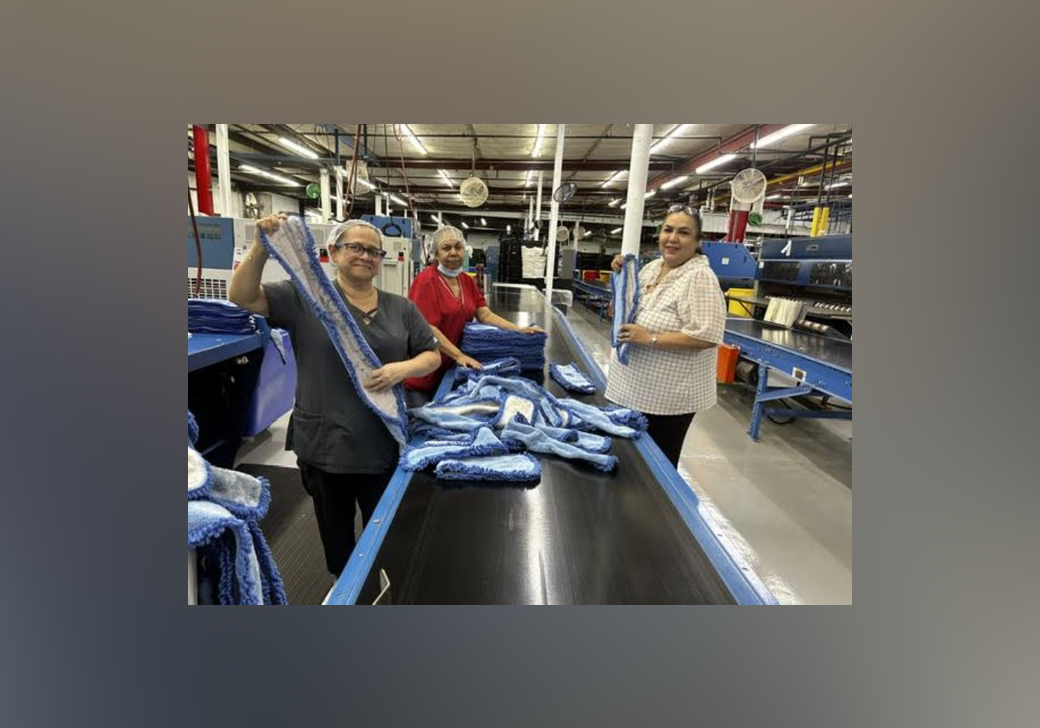
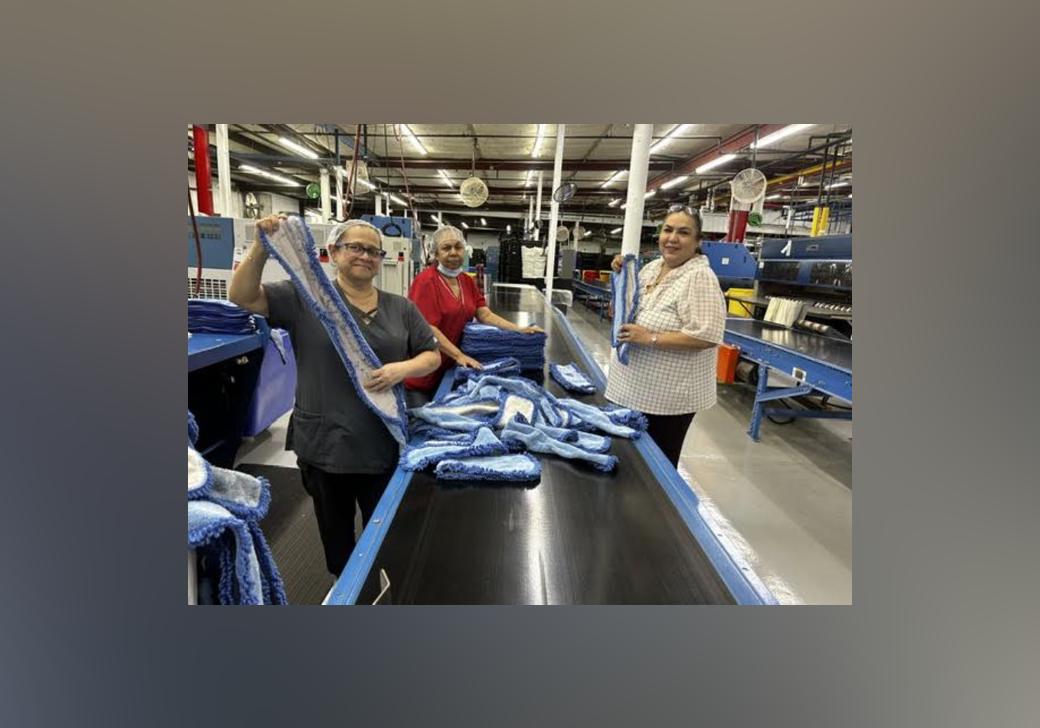
Pictured Above (l/r): Division Muskogee team members Leida Contreras, Juana Villanueva and Marcela Paige.


Sign Up For Our Newsletter
Receive the latest updates on the linen, uniform and facility services industry from TRSA delivered straight to your inbox.