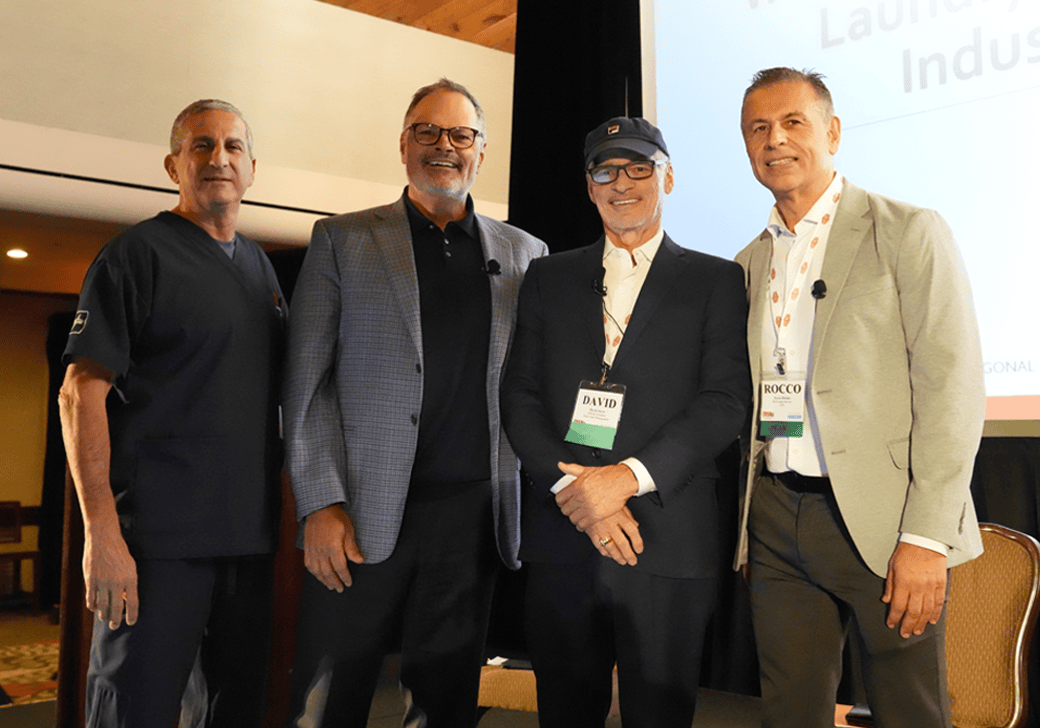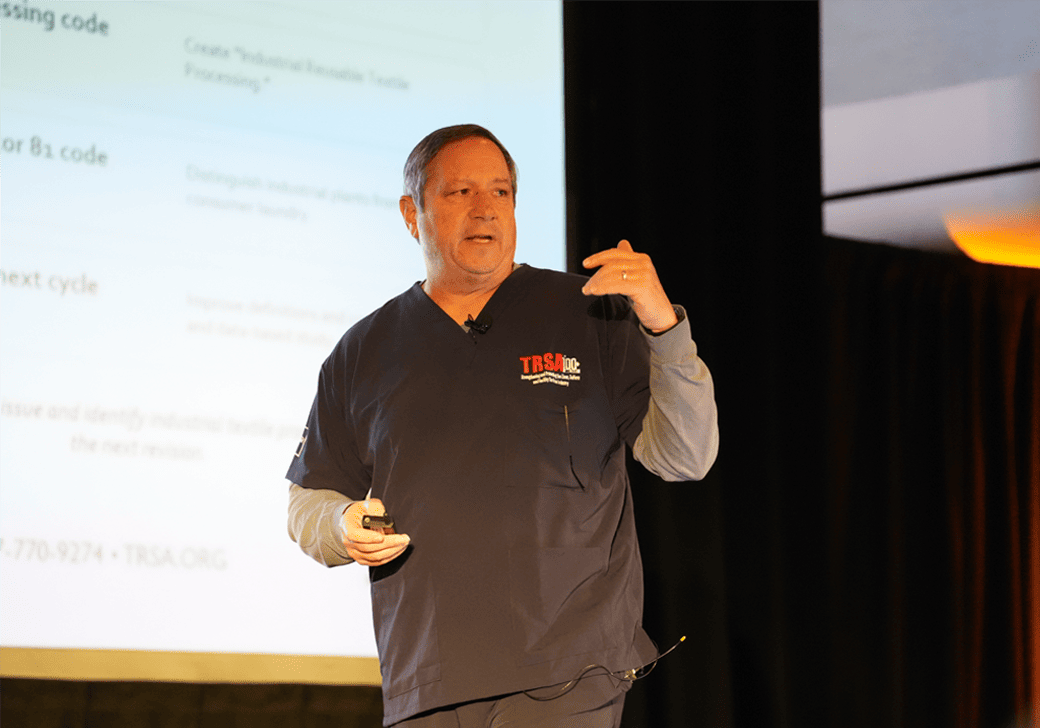

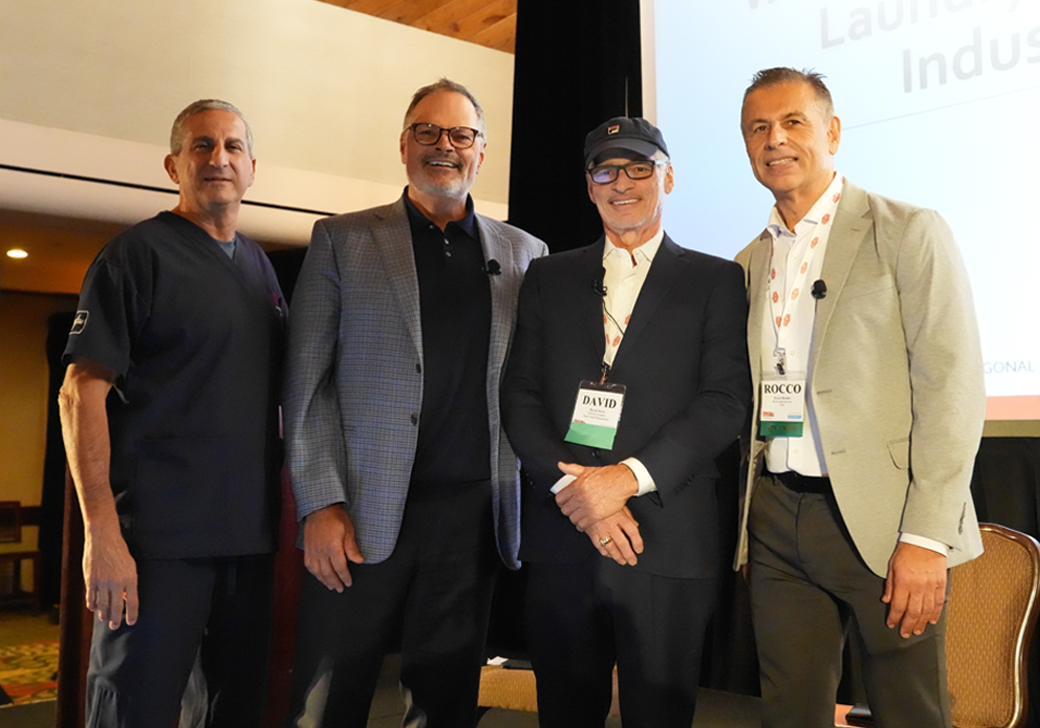
The closing CEO panel at TRSA’s 15th Annual Healthcare Conference focused on how healthcare operators must adapt to consolidation, technology, workforce shifts and changing customer expectations.
The panel was moderated by TRSA President & CEO Joseph Ricci and featured Randy Bartsch, Ecotex Healthcare Linen Service; Rocco Romeo, HLS Linen Service; and David Stern, Stern Asset Management. Key takeaways from the panel discussion included:
- Technology and AI will Reshape Every Aspect of Healthcare Laundry Operations
All three executives agreed that artificial intelligence, automation, robotics, RFID and data analytics will become fundamental competitive requirements rather than optional investments. AI will improve operational efficiency, customer reporting, inventory management and decisionmaking, while automation will reduce labor-intensive tasks and increase throughput. Future laundries will require fewer people handling linen directly but more technically skilled employees managing advanced systems.
“Technology and data were repeatedly identified as the most important strategic investments over the next 24 months,” Romeo said.
- Industry Consolidation will Continue, Making Scale More Important
Healthcare systems are consolidating, and healthcare laundry providers are following a similar path. Larger operators gain advantages through purchasing power, geographic coverage, operational redundancy and the ability to serve increasingly complex health systems. However, panelists emphasized that scale alone is not enough. Culture, service quality, operational execution and disciplined investment remain critical differentiators.
- Data is Becoming Part of the Product
Customers increasingly expect detailed operational data, performance reporting and actionable insights. The panel noted that healthcare providers want more transparency into utilization, service levels and supply chain performance. Future customer evaluations may rely heavily on AI-powered scorecards and automated performance monitoring. Providers that can turn operational data into customer value will have a significant advantage.
“Information is really becoming part of the product,” Bartsch said.
- Healthcare Laundry Must Position Itself as Critical Infrastructure, Not a Commodity
While healthcare buyers often view linen services as a commodity, panelists argued that the industry plays a vital role in patient care and healthcare resilience. COVID-19 highlighted the essential nature of reusable textiles, clean linen and barrier garments. The panel stressed that operators should continue educating customers on the value of reusable products, supply chain resilience and inventory utilization rather than competing solely on price.
“The low-cost producer wins in a commodity environment, but providers must also create value beyond price,” Stern said.
- Workforce Challenges will Accelerate the Push Toward Automation
Declining birth rates, aging populations and shrinking labor pools in North America will create long-term workforce pressure. The panel believes automation and AI will become necessary not because jobs are disappearing, but because fewer workers will be available. Future success will depend on attracting younger talent, developing technical expertise and creating career paths that align with increasingly sophisticated technology-driven operations.
The panel’s central message was clear: healthcare laundry providers face an increasingly technology-driven, consolidated and data-centric future. Companies that invest in automation, AI, workforce development and customer-focused data capabilities while maintaining operational excellence will be best positioned to succeed over the next decade.


Sign Up For Our Newsletter
Receive the latest updates on the linen, uniform and facility services industry from TRSA delivered straight to your inbox.