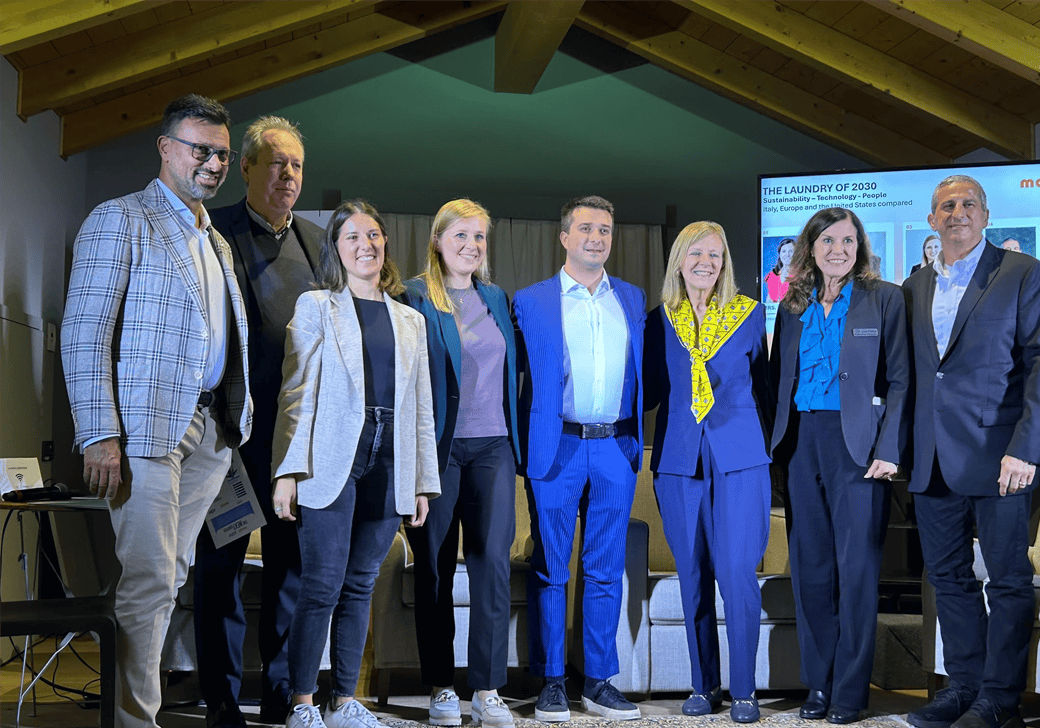

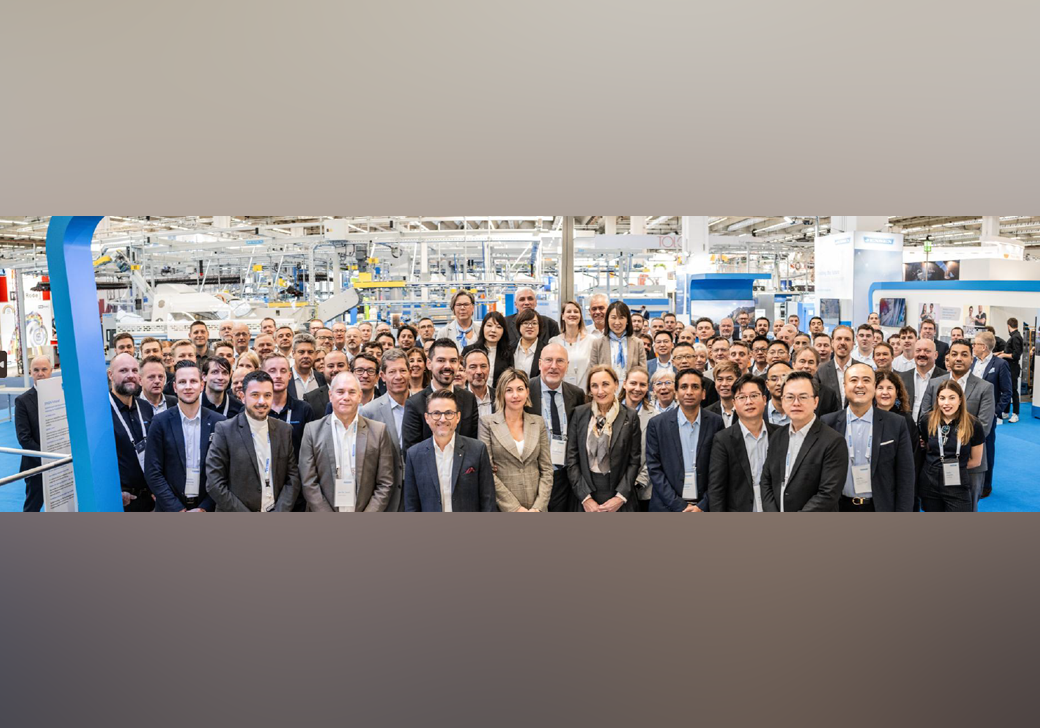
JENSEN-GROUP placed automation, artificial intelligence and resource efficiency at the center of its vision for the industrial laundry of the future during an Oct. 23 press conference at EXPOdetergo International 2026 in Milan.
The company presented technology intended to reduce manual textile handling, improve productivity and help laundries respond to persistent workforce challenges. JENSEN described its long-term vision as a highly automated, data-driven laundry in which employees increasingly supervise, coordinate and optimize production systems rather than perform heavy, repetitive tasks.
Automation Extends Beyond Individual Machines
A central focus was JENSEN’s “dark factory” concept, which combines automated soiled-linen sorting with storage and buffering. Under the model, employees load unsorted goods during staffed hours, while the system continues sorting and preparing batches with limited operator involvement. Those batches can then be ready for washing when the next production shift begins.
JENSEN said the approach can increase production while reducing labor requirements, rewash and dependence on night-shift staffing. It also allows laundries to operate sorting equipment for more hours and potentially process the same daily volume with a smaller system.
The broader goal is to reduce operator touchpoints throughout production. JENSEN identified three principal interactions in a highly automated laundry: feeding the soiled-side system, loading goods into finishing equipment and handling dispatch. The company is working toward reducing those interactions from three to two as automation becomes more integrated.
Sorting Technology Moves into the Mainstream
JENSEN positioned automated soiled-side sorting as an established technology rather than an emerging concept. The company reported more than 200 automated sorting installations and more than 300 THOR robots operating across 26 countries. It also cited more than 15 years of sorting experience and more than 10 years of applying AI to laundry operations.
The systems use modular components to feed, separate, identify and classify goods. According to JENSEN, the configurations can be adapted to different production requirements and installed in existing facilities, allowing operators to begin with a smaller system and add sorting capacity over time.
JENSEN said this flexibility is important as laundries confront labor shortages, rising operator costs, employee turnover and difficulty recruiting skilled workers. Automation also can reduce employees’ exposure to heavy, repetitive and potentially hazardous work on the soiled side.
AI Supports Sorting and Quality Control
Camera-based AI is playing a growing role in textile identification and quality control. JENSEN described a test at a European laundry that compared the Inwatec sorting system’s camera classifications with item-level RFID information. The trial reported 98.2% correct classifications across several textile categories.
The technology can identify items that do not belong in a batch and route them away from production before they cause contamination or processing problems. It also can detect stains, tears and other defects. Depending on a laundry’s requirements, an identified piece can be rejected or directed to another quality or pricing category rather than automatically discarded.
JENSEN also highlighted BLIZZ, an automated towel-separation and feeding system with built-in quality control and an integrated reject function. The company reported stable performance of up to 500 pieces per hour when processing mixed batches that include unsuitable items.
JENSEN also highlighted its finishing equipment, dryers and an automated garment-handling system at the press conference.



Sign Up For Our Newsletter
Receive the latest updates on the linen, uniform and facility services industry from TRSA delivered straight to your inbox.