
Hotel linen supplier Metro Laundry Service places a high premium on maximizing community connectivity to enhance its operations. A single location business in Prince Georges County, MD, serving the Baltimore-Washington corridor, the company steadily turns to government and community organizations. This connectivity supports regulatory compliance while bolstering other company functions, especially staffing, particularly for difficult hires, maintenance personnel among them.
It’s a testimonial to the value of developing and maintaining relationships with local government officials, who provide access to county resources and serve as gateways to state agencies and local private-sector organizations. Phoenix-based consultant Richard Burney, previously a U.S. House Appropriations Committee staffer, guides the organization in unveiling such opportunities to connect.
Any linen, uniform and facility services employer seeking to follow Metro’s example would start by learning about local government agencies in its jurisdiction responsible for supporting business growth, workforce development and economic sustainability.
In Prince George’s, these include:
- Prince George’s County Economic Development Corp.
- Employ Prince George’s
- Prince George’s County Redevelopment Authority
- Prince George’s County Supplier Development & Diversity Division
- Prince George’s County Supplier Opportunities Access Resources Center
Metro COO/President Steven Young points out that establishing relationships with individuals in such agencies is an ongoing challenge. “They change jobs. Management can be a revolving door. If you don’t stay in touch, you won’t know when you’ll need to start all over again.” When you make your connection, such an individual is often pressed to work with you, contending with a thin budget to address high constituent demand. “They’re stretched thin,” he says. “You have to annoy the heck out of them. Be persistent to the point that they will satisfy your request just to get rid of you.”
Support for Workplace Development
For recruiting maintenance personnel, Metro has a relationship with a county community college with automotive and HVAC programs. Because laundry maintenance draws on other disciplines (plumbing, electrical, etc.), technician work in the industry represents an opportunity for such students to grow their careers. “Locally elected officials are interested in finding training opportunities. We network with other businesses and note a sense of urgency for job training. Government is addressing that need,” says Burney.
Founder Bernard Young has a history of working with community groups to recruit Metro employees. Over the years, 20+ ex-offenders have worked for the company.
Collaboration with the local organization representing the Association of Retarded Citizens (ARC) began when Metro learned that 90% of a Cincinnati laundry’s production workers were ARC clients. Retention success came slowly to Metro by adopting this effort, thanks to job coaches from the local ARC representative organization.
Metro has earned state employment grant money by hiring through a state program and retaining the recruits. Steven learned about the program by attending a county event.
Before the impacts of COVID prompted Metro to consolidate operations into a single location, closing its Howard County, MD facility, that county’s workforce development operation was instrumental in staffing that plant. “We had very engaged employees there,” he says.
“For some people, the work is mundane and they find it’s really hard to do, but sometimes hires are the perfect fit.” He pointed to the success with developmentally disabled people. “They can be very appreciative and you get a better effort from them. They’re fine with repetitive motion. It suits them.” Those on the autism spectrum “can be quite bright.”
Connecting One Step at a Time
Working with the state commerce department has helped on several fronts: grants providing a tax credit for qualified new hires, training for production and maintenance staff and most recently, R&D support for proprietary production monitoring software.
Community networking has provided access to capital for growth and expansion. A Washington Gas program landed Metro a grant for thermal ironers. Persistence in becoming a member of the Maryland Manufacturing Association (two years of meeting participation as a nonmember) is leading the company to more utility incentives.
Local connections introduced Metro to Rockville, MD-based My Valuable Business, a consultant that aligns finance, HR, marketing, tax planning and governance to increase client companies’ asset value. Initially MVB’s Washington outpost supported Metro’s financial management, accounting and bookkeeping; more recently, HR and marketing consulting.
Public and Customer Industry Relations
Steven sees the latter as better positioning Metro “as thought leaders. We’re a one-stop shop for housekeeping linen. Any hotel operation can come to us for laundry service, rental, RFID tracking, consulting and more.” This primary goal, he says, “is to educate the hotel world and our industry about the local and global impacts of our business.”
Articles from e-news archives illustrate the PR momentum the company is building on:
Earns Governor’s Citation Award. Outstanding contributions to the Minority Business Enterprise (MBE) small-business community in Maryland.
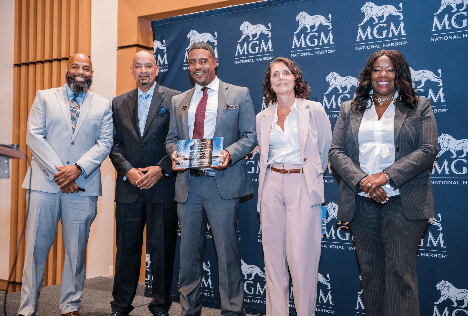
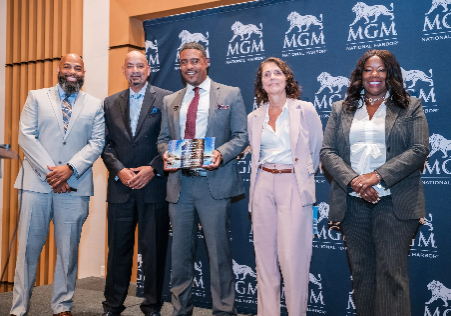
Receives 2025 Minority Supplier of the Year Award. Cited by MGM National Harbor for building a foundation of trust and reliability, providing high-quality laundry solutions.
Steven indicates that Metro wants “to be more aggressive, continuing to re-engage with county officials. Relationships are critical to what we do. By being involved in the community, we get more access.”