
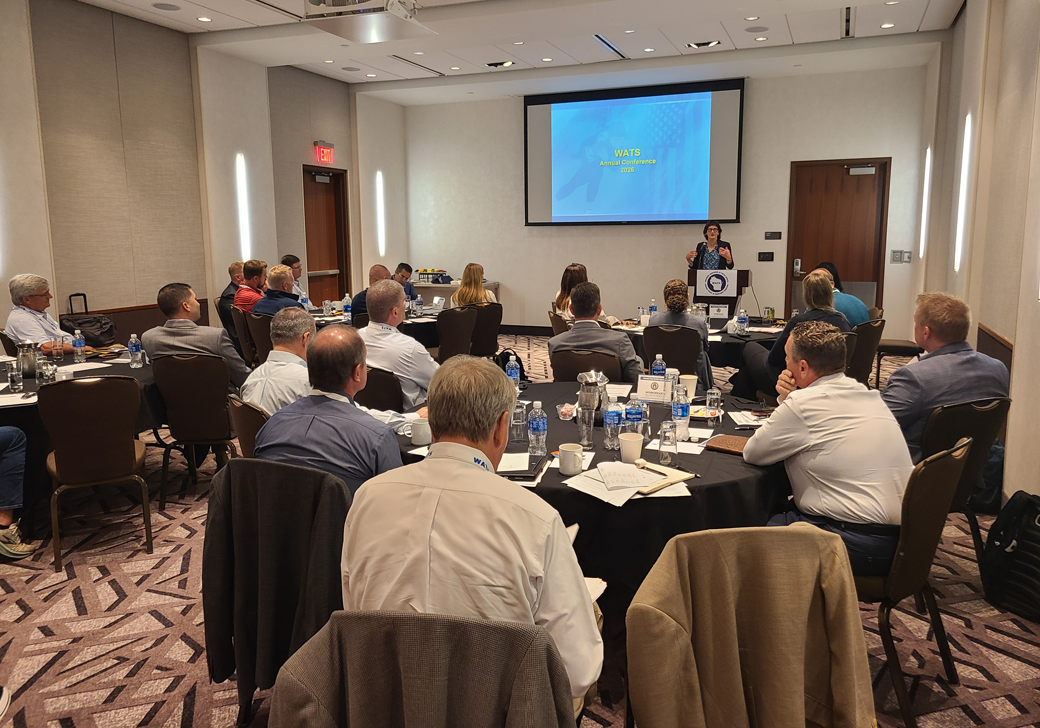
The Wisconsin Association of Textile Services (WATS) brought linen, uniform and facility services executives, suppliers and industry partners together Sept. 1-2 for the 2026 Midwest Executive Conference & Roundtable at the Potawatomi Hotel & Casino in Milwaukee.
The two-day program combined executive-level discussion, practical business education, networking and recreation. Sessions addressed the opportunities and responsibilities associated with artificial intelligence, the importance of comprehensive business continuity planning and the personal qualities that help leaders and organizations achieve their best.
Inaugural Roundtable Focuses on Regional Challenges
The conference opened Tuesday afternoon with the Midwest Executive Roundtable, Navigating Today’s Challenges and Opportunities. The facilitated discussion gave executives an opportunity to examine issues affecting the region, exchange practical insights and consider how industry leaders can respond to a rapidly changing business environment. Nikki Golden, CAE, managing director at Association Laboratory, facilitated the discussion.
AI as a Business Capability
After having the opportunity to network and enjoy a fun evening together, the attendees resumed Wednesday morning with a session titled “AI and the Future of Business: Smarter Growth in the Digital Era,” presented by Carmella Cadusale of MCC Marketing and a TRSA Media Marketing Partner. Her central message was that artificial intelligence is no longer simply a technology trend. It is becoming a business capability that can influence marketing, sales, operations, communications, decision-making and customer engagement.
Cadusale explained that AI becomes more valuable when organizations supply it with appropriate business context. She illustrated a workflow moving from research and analysis through buyer strategy, messaging, campaign planning and sales enablement. A live demonstration involving a premium machine-washable women’s sweater showed how AI could help identify market segments, define a buyer problem, develop messaging, construct a 90-day launch campaign and prepare sales-discovery questions.
The session also addressed the responsibilities accompanying AI adoption. Organizations should protect customer, employee, financial and other sensitive information; safeguard intellectual property and trade secrets; establish approved tools and access controls; and maintain meaningful human review. Cadusale stressed that AI outputs should be treated as recommendations rather than decisions.
Business Continuity is More than an Insurance Issue
Paul Kihslinger, vice president and shareholder at Robertson Ryan Insurance, followed with “Business Continuity Planning: How to Prepare, Respond and Recover When Operations are Disrupted.” His presentation stressed that continuity planning is a business issue, not simply an insurance issue.
Kihslinger explained that a disruption can affect far more than physical property. Employees, customers, suppliers, technology, revenue, operations and an organization’s reputation may all be affected. Potential causes range from severe weather, fire and flooding to cyber incidents, utility interruptions, equipment breakdowns, workforce shortages and supply-chain failures.
The presentation distinguished between disaster recovery and business continuity. Disaster recovery concentrates on restoring operations after an event, while business continuity focuses on keeping critical functions operating before and during a disruption. Kihslinger organized the planning process around four phases: prepare, respond, recover and review. He noted that planning should be an ongoing process rather than a document left on a shelf.
Effective planning begins with a risk assessment and business-impact analysis. Leaders should identify events that could stop operations, determine which resources and vendors are essential and establish how quickly critical functions must be restored. Customer service, production, order fulfillment, payroll, accounting, supply-chain management and information technology may have different recovery priorities because not every activity carries the same operational urgency.
Gold Medalist Shares the Essentials of Personal Excellence
Five-time Olympic gold medalist Bonnie Blair delivered the closing keynote, Achieving Your Personal Best. Her presentation explored how individuals define success and focused on three critical essentials: dedication, balance and risk.
Under dedication, Blair highlighted passion, goals, performance, attitude, communication, attention to detail, and the importance of having a plan and then executing it. Her presentation encouraged participants to commit fully, take control of their preparation and continue performing through the finish line.
Blair’s discussion of balance recognized that achievement is rarely an individual effort. Family members, coaches, mentors, competitors, teammates and co-workers all contribute to personal and professional growth. Her slides also reminded participants of the importance of taking care of themselves and of seeking guidance because people cannot accomplish everything alone or without perspective.
The presentation reframed competitors as potential sources of motivation and improvement. Among the comparisons featured was ‘Bonnie vs. Bonnie,’ with the clock serving as the ultimate measure of progress. This reinforced the broader idea that personal excellence is not simply about outperforming others, but about continually improving one’s own performance.
On risk, Blair encouraged attendees to recognize that change is constantly taking place, think beyond conventional approaches, return to the basics when necessary and bring genuine commitment to what matters. Her presentation tied those principles to a family motto centered on being better today than yesterday and better tomorrow than today.
The keynote’s concluding thought, ‘It’s not every four years, it’s every day,’ connected Olympic preparation to everyday leadership. Sustained excellence depends not only on major moments, but also on the commitment, choices and habits practiced consistently between them.
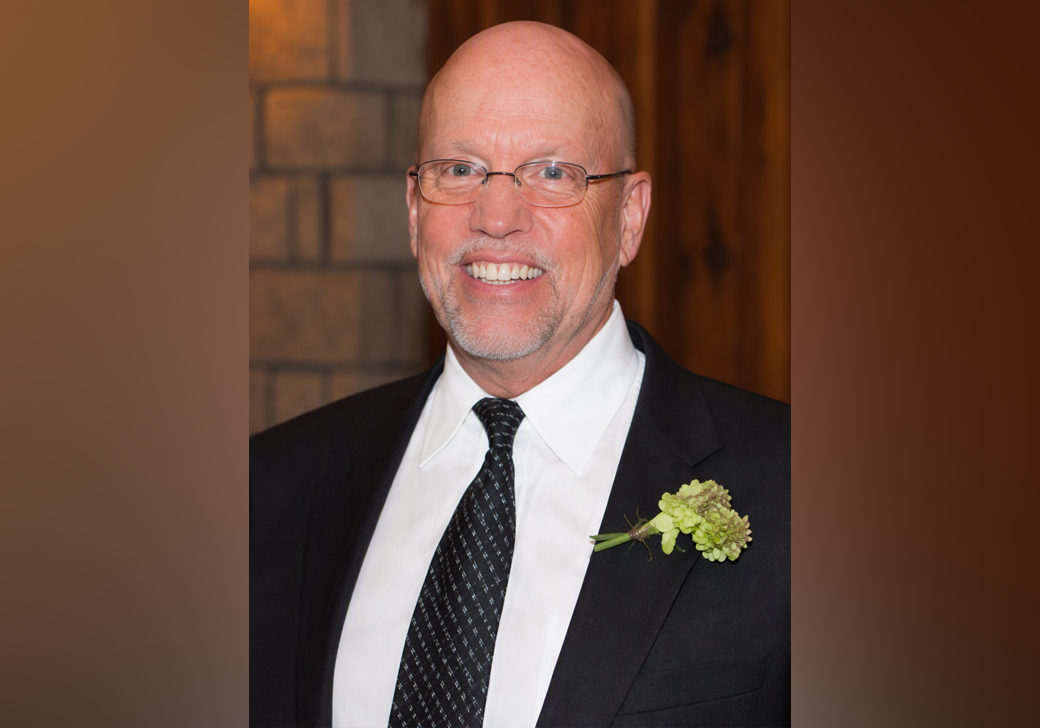
WATS also recognized David Jerrett, CEO, Bay Towel Inc., Green Bay, WI, for his years of service on the WATS Board, most recently as the treasurer.
Networking Continues on the Golf Course
After the educational program, participating attendees gathered at New Berlin Hills Golf Course for a box lunch and nine-hole golf tournament. The golf invitational, sponsored by Royal Basket Trucks, provided an additional setting for networking and informal conversation among conference participants.
WATS thanks the following conference sponsors: Workwear Outfitters, Stangle Co. Advisors, M+A Matting and Royal Basket Trucks.



Sign Up For Our Newsletter
Receive the latest updates on the linen, uniform and facility services industry from TRSA delivered straight to your inbox.