
The TSA Autumn Conference in the United Kingdom (UK) this month highlighted the payback that small operational changes can deliver in terms of efficiency and sustainability.
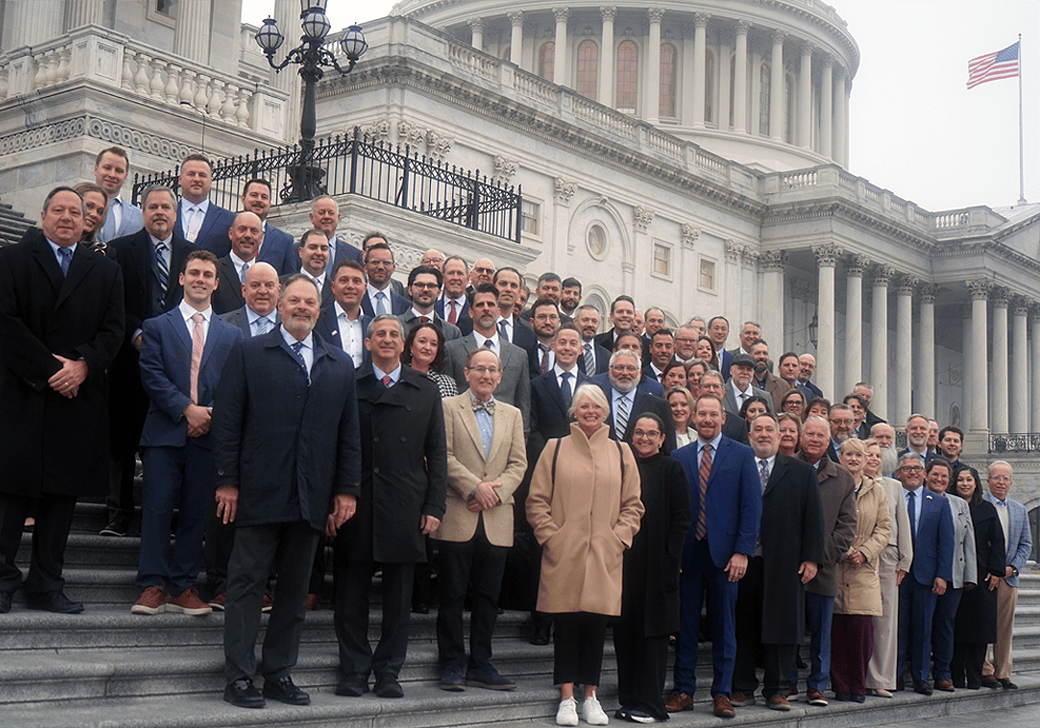
The Oct. 13-14 event sponsored by the UK’s Textile Services Association (TSA) drew a record turnout to the DeVere Tortworth Court in the Cotswolds, an area of natural beauty near Bristol, England. Attendees gained insights on key issues, including trends in hospitality, healthcare and fleet innovations.
TSA CEO David Stevens welcomed delegates with the news that most of the UK’s larger laundry businesses are TSA members. That gives them access to workshops and training initiatives on topics including Laundry Preventative Maintenance, Fire Prevention Leadership and more.
Stevens added that Laundry Innovation and Industry Day scheduled for April 28, 2027, will offer innovators 15-minute sessions to pitch inventions/ideas to the industry. Laundry Open Week next March will feature lobbying members of Parliament on industry issues, while inviting schools and young people to tour laundries to promote industry awareness and encourage students to consider careers in the linen, uniform and facility services industry in Great Britain.
Stevens said UK hospitality customers expect steady business next year. “However, suppliers are expecting growth. The TSA Laundry Cost Index is running at 6%, and hotels predict 2.1% revenue growth. Look out for price wars for laundries,” he cautioned. “Stable demand, plus limited growth, plus rising costs equals greater need for efficiency.”
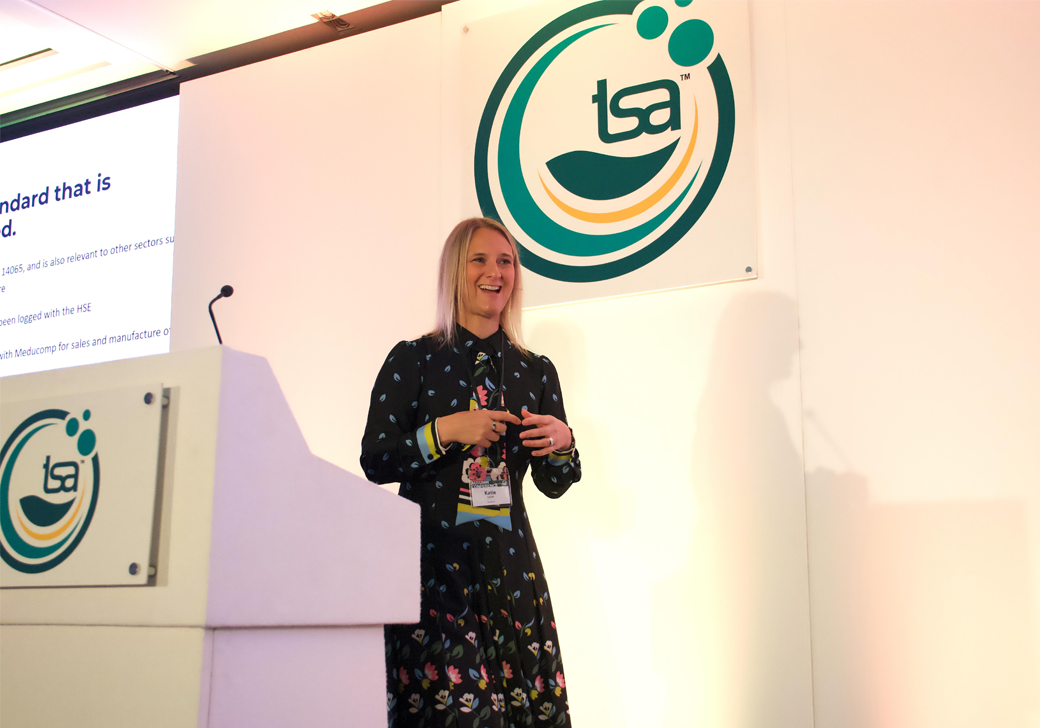
On another topic, infection-preventionist Dr. Katie Laird of De Montfort University was a welcome returnee to the conference. She’s worked with the TSA and TRSA on previous and ongoing infection-control projects, research and training.
For any monitoring of pathogens in the laundry process, Laird recommends using a purpose-developed bioindicator to monitor a defined microbial challenge in wash processes. This will validate that bacterial/sporicidal wash conditions perform as intended – not simply that the cycle ran based on the validated temperatures and chemistries. “The requirement is for a test methodology that measures ‘kill,’ rather than dilution,” she said. “The industry needs a standardized test methodology – in effect, a level playing field.”
Dr. Laird also warned attendees about Candida auris, an emerging fungal pathogen whose persistence and ease of transmission have raised healthcare concerns. While C. auris is now endemic in several European countries, the UK has maintained lower case numbers through active surveillance and infection control. However, recent increases have highlighted the need for vigilance. “When the next pandemic hits, we need to be ready,” she said. A code of practice on bioindicators is available on the TSA website. For additional details on Dr. Laird’s research, including “biofilms,” click here.
Another speaker addressed advances in fleet sustainability. Few in the UK have done more in this area than Stuart Murphy, who heads the Royal Mail’s Fleet Transformation program. Murphy said his aim is “to save the world one van or truck at a time.” He oversees the organization’s electrification program.
The Royal Mail, a privately held, publicly regulated entity, delivers a ‘one-price-goes-anywhere’ service on a range of letters and parcels that reach roughly 32 million addresses across the UK, six days a week. Royal Mail operates the largest UK commercial fleet with some 50,000 vans and trucks operating from roughly 1,200 locations.
Having deployed more than 9,000 electric vehicles across 200-plus sites in 2026, Stuart’s team at the Royal Mail also operates the UK’s largest fleet of electric commercial vehicles. Achieving that status has included creating one of the UK’s largest privately owned charging networks, with more than 4,500 charging sockets, including rapid charging stations.
Data is driving the transformation, said Murphy, who spells out what operators need to input initially, including road types, charging requirements, routes, payload, and more.
When you’ve analyzed these and other factors, you can calculate the total cost of ownership, including vehicle cost (purchase or lease), scheduled and unscheduled maintenance, EV charger posts, EV charger post maintenance, fuel (cost per KW per mile), breakdowns, RTC rates and repairs, insurance (vehicle and property), vehicle-replacement costs, driver training and warranty. Click here for details.
Murphy concedes that the conversion program faces limits, noting that, “You can’t electrify every route; some just aren’t practical.” He also questioned the practicality of hydrogen-powered fleets. “We trialed a hydrogen van and it was problematic. No landlord would countenance a charging site on their land. Electric vehicles are taking us to where we need to be now and for the foreseeable future.”


Sign Up For Our Newsletter
Receive the latest updates on the linen, uniform and facility services industry from TRSA delivered straight to your inbox.