




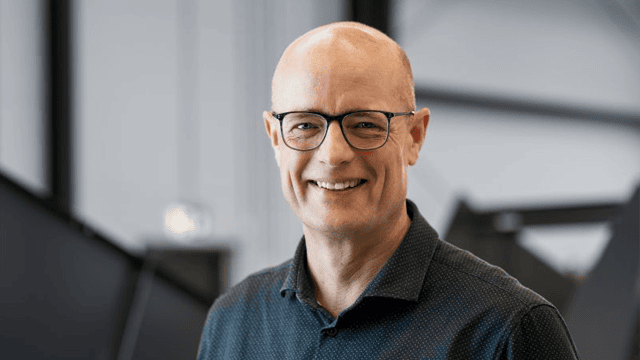
 Mads Andresen, the chief innovation officer for JENSEN-GROUP, discusses how robotics, artificial intelligence and data analytics are transforming linen, uniform and facility services operations. Andresen discusses the growing role of automation in improving productivity, supporting employee retention and enhancing workplace safety, while sharing his vision for a more connected, data-driven laundry of the future.
This episode is sponsored by:
Jason Risley: Welcome to TRSA’s Linen, Uniform and Facility Services Podcast, where we explore the trends, technologies and leadership strategies shaping the industry. Today’s episode is sponsored by JENSEN-GROUP. I’m your host Jason Risley, and I’m joined by Mads Andresen, the chief innovation officer for JENSEN-GROUP and the chief operating officer for the company’s European operations. With more than 25 years of experience in robotics, Mads brings a practical perspective on how automation, artificial intelligence and connected technologies are transforming linen, uniform and facility services operations. In our conversation, we discuss the growing use of robotics in soil sorting and textile handling, how automation can support employee retention and workplace safety, and why the industry’s next technological breakthrough may come from using existing operational data to make better decisions. Mads also shares his vision for the laundry of the future, where employees spend more time supervising processes, maintaining quality and serving customers, and less time manually moving textiles. Here is my conversation with Mads Andresen.
Jason Risley: I’m Jason Risley, host of TRSA’s Linen, Uniform and Facility Services Podcast. I’m here today with Mads Andresen, chief innovation officer for JENSEN-GROUP. Mads, thanks for joining me today. Can you tell us about your role at JENSEN-GROUP?
Mads Andresen: Thank you for the invitation, Jason. I founded Inwatec, a robotics company serving the laundry industry, in 2009. We joined JENSEN-GROUP in 2018, and I have been working on innovation across the company since then. Since April, I have also served as chief operating officer for JENSEN-GROUP in Europe.
Jason Risley: So your role is expanding with JENSEN-GROUP.
Mads Andresen: It is. I’m part of the executive management team. In addition to overseeing innovation throughout the organization, I’m now responsible for our sales and operations in Europe.
Jason Risley: Your work focuses heavily on technology for laundry operators, with automation being a major part of that. What does automation look like in a commercial laundry today?
Mads Andresen: I think we are in the middle of a breakthrough in what we call physical automation, or robotics. Handling textiles is difficult because they are soft and flexible. However, cameras, artificial intelligence, mechanics and software are developing so quickly that we can now automate tasks we did not believe were possible just a few years ago.
One example is soil sorting, which occurs at the beginning of the laundry process. When sorting on the soil side improves, we often see the downstream clean process become more efficient as well. Today, robots using AI-based cameras are sorting soiled linen in more than 200 laundries around the world.
I think the next breakthrough in robotics and physical automation will be towel feeding. We have seen this technology demonstrated at exhibitions for many years, but much of it was at the proof-of-concept stage. We are now seeing it move rapidly from demonstrations into real-world laundries, where robots perform the work day after day.
I have worked with robotics for more than 25 years, and I really like what I see happening in our industry right now.
Jason Risley: Labor shortages continue to be a persistent issue in the industry. How is automation helping operators address workforce challenges?
Mads Andresen: I think retention has become an even greater challenge for laundries than recruitment. Repetitive jobs, including feeding, lifting, pushing carts and sorting linen, make it difficult to recruit, train and retain employees.
A customer recently told me that the company can hire people, but retaining them is extremely difficult. The continuous cycle of recruiting and training employees, and helping them achieve consistent quality, is time-consuming. Every time a laundry loses an employee, it also loses knowledge, and service can become inconsistent for customers.
That is the cycle we want to break through automation. Robotics and automation can make jobs more interesting and less physically demanding. We often see fewer injuries and less employee sickness as well. One example is using X-ray technology to identify syringes in soiled textiles, helping protect employees from injuries.
Automation can create better jobs, improve quality and deliver more consistent, stable throughput. For me, automation is about making laundries places where people want to work and, more importantly, choose to stay.
Jason Risley: You mentioned several technologies, including robotics and X-ray systems that can identify syringes. With this level of automation and technology entering laundries, is it difficult to find employees who can maintain the equipment?
Mads Andresen: That is a very good question, and it is one we often hear from laundries. We recognize that finding people can be difficult. As manufacturers, we also have an obligation to help laundries adopt and work with these new technologies.
At the same time, a new generation is entering the laundry industry with a stronger technology background. I think finding employees who can work with the technology is becoming easier, particularly as we make the laundry workplace more interesting.
Jason Risley: Do you partner with your laundry customers to train their maintenance teams to work on the equipment?
Mads Andresen: Yes. We offer comprehensive training programs for the different technologies we provide. Customers can send service or maintenance employees to our factories for training, or we can conduct training on-site.
On-site training is often valuable because employees can learn directly on equipment they already know. Training is a very important part of our offering.
Jason Risley: So it really works as a partnership between JENSEN-GROUP and the laundries.
Mads Andresen: Yes. We prefer to view our customers as partners because our relationships are long-term. We do not typically have customers who make a single purchase and then leave. We work together for many years.
Jason Risley: Beyond physical automation, how are digital technologies such as the Internet of Things, sensors and data analytics changing laundry operations?
Mads Andresen: They are changing operations quite a lot. I think we are entering a very interesting phase that could be described as a second wave of automation.
The first wave focused on automating physical work. The second wave will help automate and improve decision-making, which is where new AI capabilities come into play.
During the past 10 to 20 years, laundries have added many dashboards that display operational data. The data might be from yesterday or from 10 minutes ago. It has been useful and has created value. Manufacturers and laundry operators have also learned a great deal from it.
However, maintaining a consistent focus on all the key performance indicators displayed on a screen can be difficult. I do not think we need to develop another dashboard. Over the next few years, we need to become better at using the data we already collect to optimize processes.
We are currently conducting a pilot project with two customers in which we analyze data from different dryers. We are learning from skilled technicians why, for example, a sheet might have different drying times in different dryers. We can then use large language models to analyze that information and explain to an operator what needs to be corrected to achieve more stable dryer throughput.
In the future, I believe we will move beyond individual machines and create truly connected processes. We will use lessons from the past, with people and AI working together to make better decisions inside the laundry.
Jason Risley: It sounds like there is a significant push to use the available data to optimize laundry operations.
Mads Andresen: Absolutely. That push has existed for many years, but technology is shifting. I still refer to some of what we are seeing as AI hype because we need to get AI to perform real work. We still have some distance to go, but the goal is to take the data we have collected for many years, make it useful and apply it to real operational decisions.
Jason Risley: JENSEN-GROUP produces plant-tour videos that showcase customers installing new technologies. Are there any laundry operators that stand out for using robotics or data to optimize their operations?
Mads Andresen: We have quite a few. One good example is Nor Tekstil in Norway, which was discussed on a recent episode of the podcast. We have a strong collaboration with the company, and its team has been very ambitious about moving toward automation for more than 10 years.
As operators continue their automation journey, they learn more and the entire organization becomes more comfortable with the technology. I think Nor Tekstil is one of the most professional operators we work with.
We also see more customers in North America moving toward automation. The greatest benefits often emerge when operators learn over time, expand their use of automation and help the organization adapt to the technology.
Jason Risley: During that earlier podcast, it was mentioned that Nor Tekstil was building a plant with significant automation and new technology. Are North American plants also modernizing and using these technologies?
Mads Andresen: Yes. One example is Miller’s, a privately owned laundry in Ohio. I visited the plant, and we had many discussions about installing robots on the soil side.
The company decided to use a single robot, RFID reading and a camera system to sort soiled uniforms. The system was installed in August of last year, and we have followed its progress closely. The team is enthusiastic about it.
Once again, the entire organization is supporting the technology and is passionate about continuous improvement. The company now wants to install another robot. It operates the existing system for more than 24 hours at a time and has expanded beyond sorting uniforms to sorting some linen as well.
This gives the operation increased flexibility, including the ability to run additional hours.
Jason Risley: It sounds like the system is working well for the company.
Mads Andresen: Absolutely. The Miller’s team is very good to work with, and we receive valuable feedback about operating in the North American market.
Jason Risley: That customer feedback must also help you improve the technology.
Mads Andresen: Exactly. That connects to the partnership we discussed earlier. Receiving feedback is essential because it helps us continually improve and sustain innovation.
Jason Risley: What will a highly advanced commercial laundry operation look like five to 10 years from now?
Mads Andresen: I believe laundries of the future will move linen with technology rather than people. Our ambition is for every textile or piece of linen to be touched no more than once, from the time soiled linen enters the operation until clean linen leaves the plant.
We will still see people in laundry facilities, but they will spend more time supervising processes and ensuring the quality of the work, linen and customer service.
In the future, operators will touch touchscreens more often than they touch linen. Of course, this will not happen overnight. We still have a great deal to learn and, honestly, that is the most enjoyable part of our work.
Jason Risley: Thank you for sharing your thoughts on innovation and new technology in laundry operations. Is there anything we missed that you would like to add?
Mads Andresen: I think we covered the topic well. The future is not about choosing between automation, robotics and digitalization. It is about bringing them all together.
The rapid development of AI and large language models can help us build resilient, connected laundries that are more productive, more flexible and better places to work.
Jason Risley: Mads, this has been a very interesting discussion. Thank you for joining me on the podcast. It has been a pleasure having you.
Mads Andresen: Thank you, Jason. It was a pleasure.
Jason Risley: Thanks to Mads Andresen of JENSEN-GROUP for sharing his insights. As Mads explained, the laundry of the future will not be built around robotics, digitalization or artificial intelligence alone. The greatest opportunities will come from bringing these technologies together to create operations that are more productive, flexible and resilient, while providing employees with safer and more engaging work. This episode of TRSA’s Linen, Uniform and Facility Services Podcast was sponsored by JENSEN-GROUP. Thanks for listening. If you enjoyed this episode, please subscribe and share it with your colleagues. Join us again for more conversations with the executives and innovators shaping the future of the linen, uniform and facility services industry.

Publish Date
September 30, 2026
Runtime
15 min
Categories


Sign Up For Our Newsletter
Receive the latest updates on the linen, uniform and facility services industry from TRSA delivered straight to your inbox.
Recent Podcasts
Episode 86 – The Future of Laundry Operations: How Technology is Reshaping the Industry